What Is a BIPV Solar Facade? Benefits, Uses & How It Works
As buildings become more sustainable and energy-efficient, architects and developers are looking for ways to integrate renewable energy directly into building design. Building Integrated Photovoltaics (BIPV) offers a solution by turning architectural surfaces such as facades and glass into active solar energy-generating elements.
A BIPV solar facade combines the function of a building facade with photovoltaic technology, allowing buildings to generate clean electricity without relying only on conventional rooftop solar installations.
What Is a BIPV Solar Facade?
A BIPV (Building Integrated Photovoltaic) solar facade is a building envelope that incorporates photovoltaic technology into architectural elements such as facade panels, solar glass, curtain walls, and other exterior surfaces.
Unlike conventional solar panels that are installed separately on a roof or structure, BIPV systems are designed as an integrated part of the building.
A BIPV facade can:
- Generate renewable electricity
- Become part of the building's architectural design
- Make productive use of vertical facade areas
- Support sustainable and energy-conscious building design
How Does a BIPV Solar Facade Work?
BIPV solar facades use photovoltaic cells integrated into specially designed glass or facade materials. When sunlight reaches the photovoltaic cells, solar energy is converted into electrical energy.
The generated electricity can be used for building loads such as:
- Lighting
- HVAC systems
- Office equipment
- Common-area utilities
- Other electrical systems
The system can be connected to the building's electrical infrastructure, allowing the generated power to contribute to on-site energy requirements.
Key Benefits of BIPV Solar Facades
1. Generates Clean Energy
BIPV facades convert available sunlight into renewable electricity, helping buildings incorporate on-site solar generation.
2. Uses Vertical Building Surfaces
Large facade areas can become productive energy-generating surfaces, particularly where rooftop space is limited.
3. Combines Architecture and Solar
BIPV replaces the need to treat solar installations and facade design as completely separate elements. Photovoltaic technology becomes part of the building's architectural envelope.
4. Flexible Architectural Design
Modern BIPV solutions can be designed with different transparency levels, colours, finishes, sizes, and configurations, providing architects with greater design flexibility.
5. Supports Sustainable Buildings
BIPV can contribute to green building strategies and the integration of renewable energy into commercial and institutional developments.
Where Are BIPV Solar Facades Used?
BIPV solar facades are suitable for buildings with significant facade areas and renewable-energy goals, including:
- Commercial office buildings
- Corporate headquarters
- IT parks
- Hospitals
- Hotels
- Airports
- Educational institutions
- Government buildings
- Shopping malls
- Mixed-use developments
BIPV can also be combined with rooftop solar, solar canopies, skylights, and other photovoltaic systems to increase the building's overall solar generation potential.
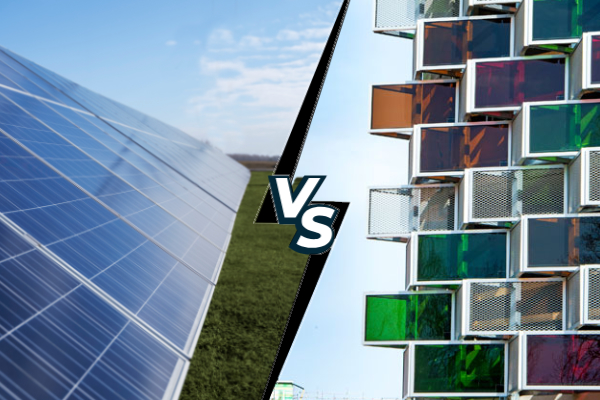
BIPV Solar Facade vs Traditional Solar Panels
| BIPV Solar Facade | Traditional Solar Panels |
|---|---|
| Integrated into the building envelope | Usually installed on roofs or mounting structures |
| Combines architectural and energy functions | Primarily designed as a solar generation system |
| Utilizes facade surfaces | Utilizes available roof or mounting areas |
| Can incorporate architectural glass | Typically uses standard PV modules |
| Offers design and transparency options | More limited architectural integration |
For many commercial projects, combining rooftop PV with BIPV facades can provide a more comprehensive approach to building-integrated solar generation.
BIPV Solar Glass and Transparency
One of the key advantages of photovoltaic glass is the ability to balance daylight, architectural appearance, and solar generation.
Semi-transparent BIPV glass can be considered for applications where natural light and visibility are important, such as:
- Glass facades
- Atriums
- Skylights
- Canopies
- Entrance areas
The appropriate transparency and configuration depend on the project's architectural, structural, lighting, and energy requirements.
Why Choose SolarScape?
SolarScape provides advanced Building Integrated Photovoltaic (BIPV) solutions designed to combine renewable energy generation with modern architectural requirements.
Our solutions include:
We work with architects, developers, consultants, and builders to develop photovoltaic solutions suited to the specific requirements of each project.
Conclusion
A BIPV solar facade transforms a building's architectural surface into a functional renewable-energy asset. By integrating photovoltaic technology into facades and solar glass, buildings can utilize more available surface area for clean energy generation while maintaining architectural flexibility.
As sustainable construction continues to evolve, BIPV provides a practical way to bring architecture and renewable energy together.
SolarScape - Every Glass Generates Energy.
Related Blogs
Benefits of BIPV Solar Panels for Commercial Architecture
For today’s high-end commercial developments, sustainability is no longer optional -
it’s an expectation...
Read more
Comparing BIPV with Traditional Solar Panels
As the world embraces sustainable architecture, solar technology is evolving to become
not just a power solution, but also an ...
Read more
Data Centre Power Requirements & BIPV
BIPV panels can be a smart, strategic addition BIPV can be especially useful in a
Data Centre...
Read more